
Temu’s Personal Aircraft Drone: Can You Fly One in Australia?
That viral Temu human drone looks like a laugh - but can you legally fly one in Australia? A licensed drone shop explains the rules, the fines and the risks.
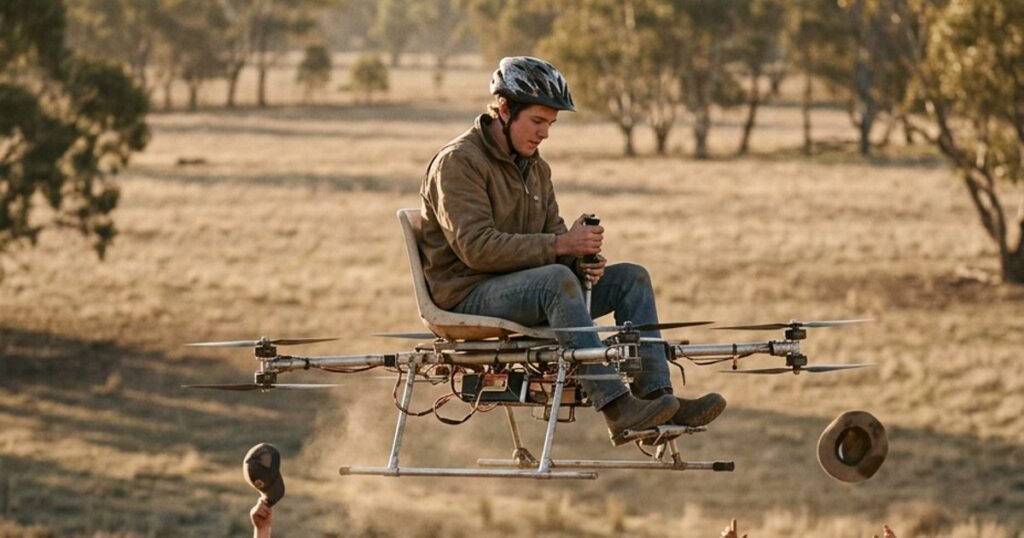
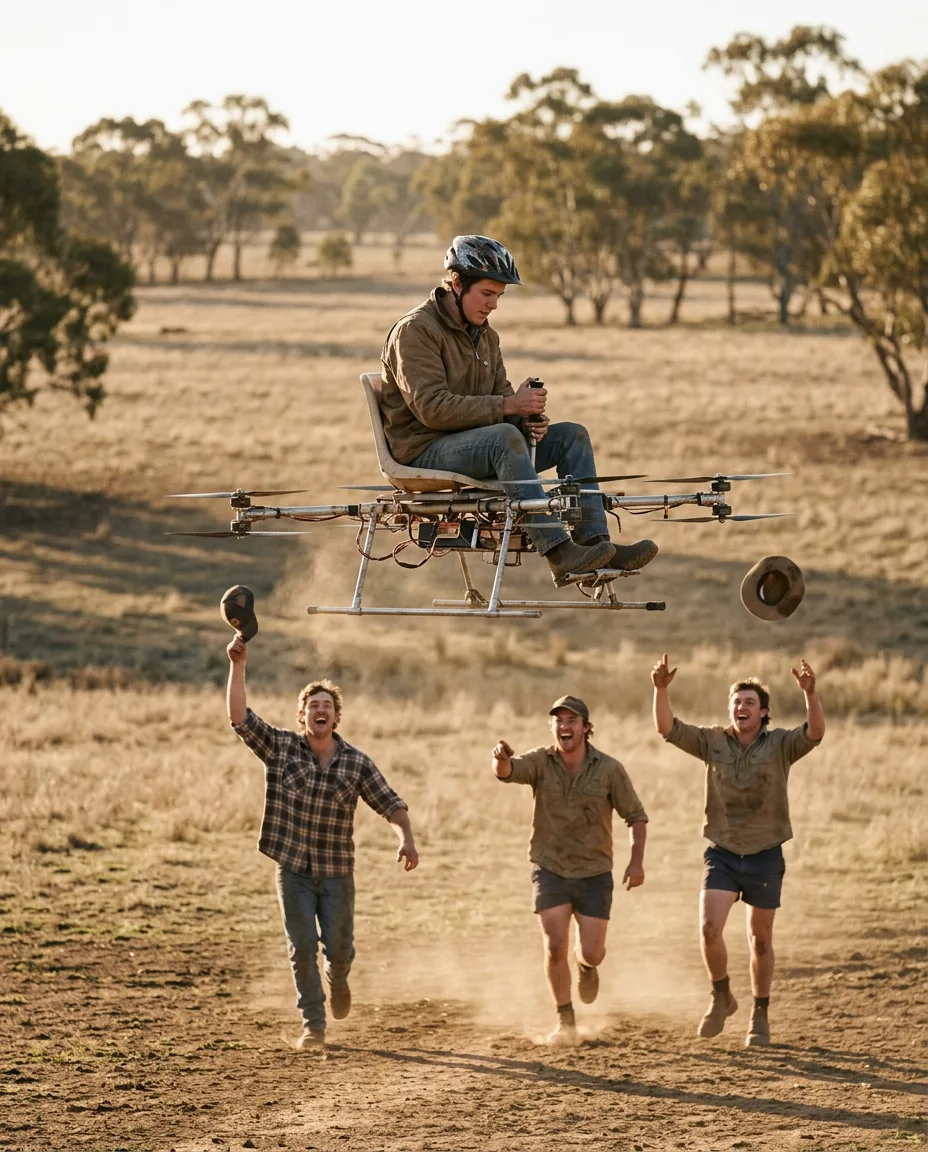
By now you’ve probably seen the video: a few young blokes buy the single most unhinged thing Temu has ever shipped — a personal aircraft drone, a one-person human drone that’s really just a giant multirotor with a seat bolted in the middle — fire it up, and go for a fly. And look, we’re not going to pretend we didn’t grin watching it. Everyone who’s ever flown a drone has, at some point, thought: "Sick. I want to sit in one."
That’s the reptile brain talking. The part of your brain that reads CASA regulations was still buffering.
Because we sell and service drones here on the Coffs Coast, our inbox has since filled up with the obvious question: "Can I buy one and fly it here?" So before anyone drops a few grand importing a flying deckchair, let’s clear it up.
Short answer: nope. Longer answer below, because the why actually matters — and it might save you a fine, your bond, or your kneecaps.
So what is a "Temu human drone," exactly?
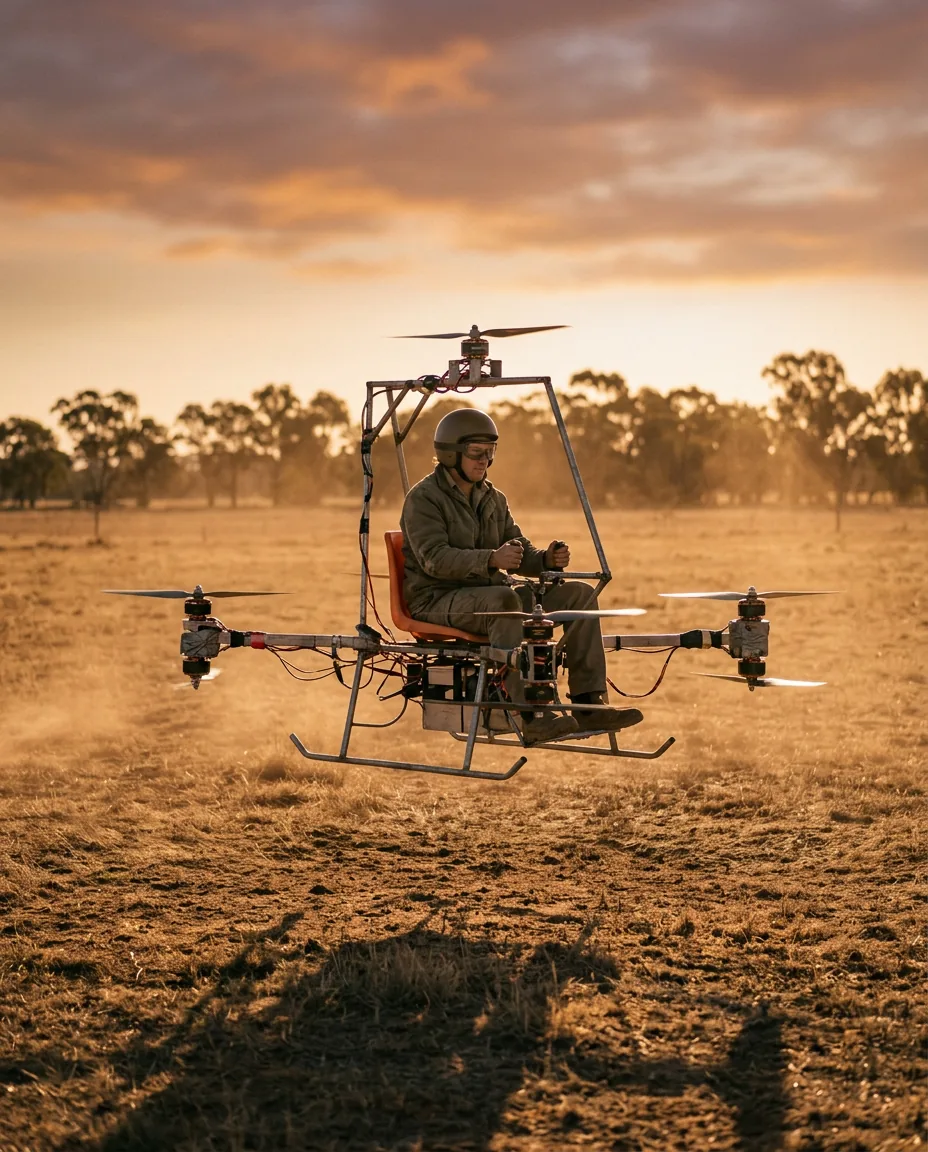
Search "temu drone for people" and you’ll find a few different listings — personal aircraft drone, human drone, flying chair, mini eVTOL. Different names, same machine: a large multirotor rated to lift a person, sold with no certification, no support and no legal category to sit in.
They’re pitched like a consumer product. They are not. And that gap — between "add to cart" and "aircraft" — is where people get hurt.
The moment you sit in it, it stops being a "drone"
Here’s the trap that catches everyone. It looks like a drone, so people assume drone rules apply. They don’t. The second a human climbs aboard and it leaves the ground, it’s a manned aircraft in the eyes of the Civil Aviation Safety Authority — and manned aircraft play by a much bigger rulebook.
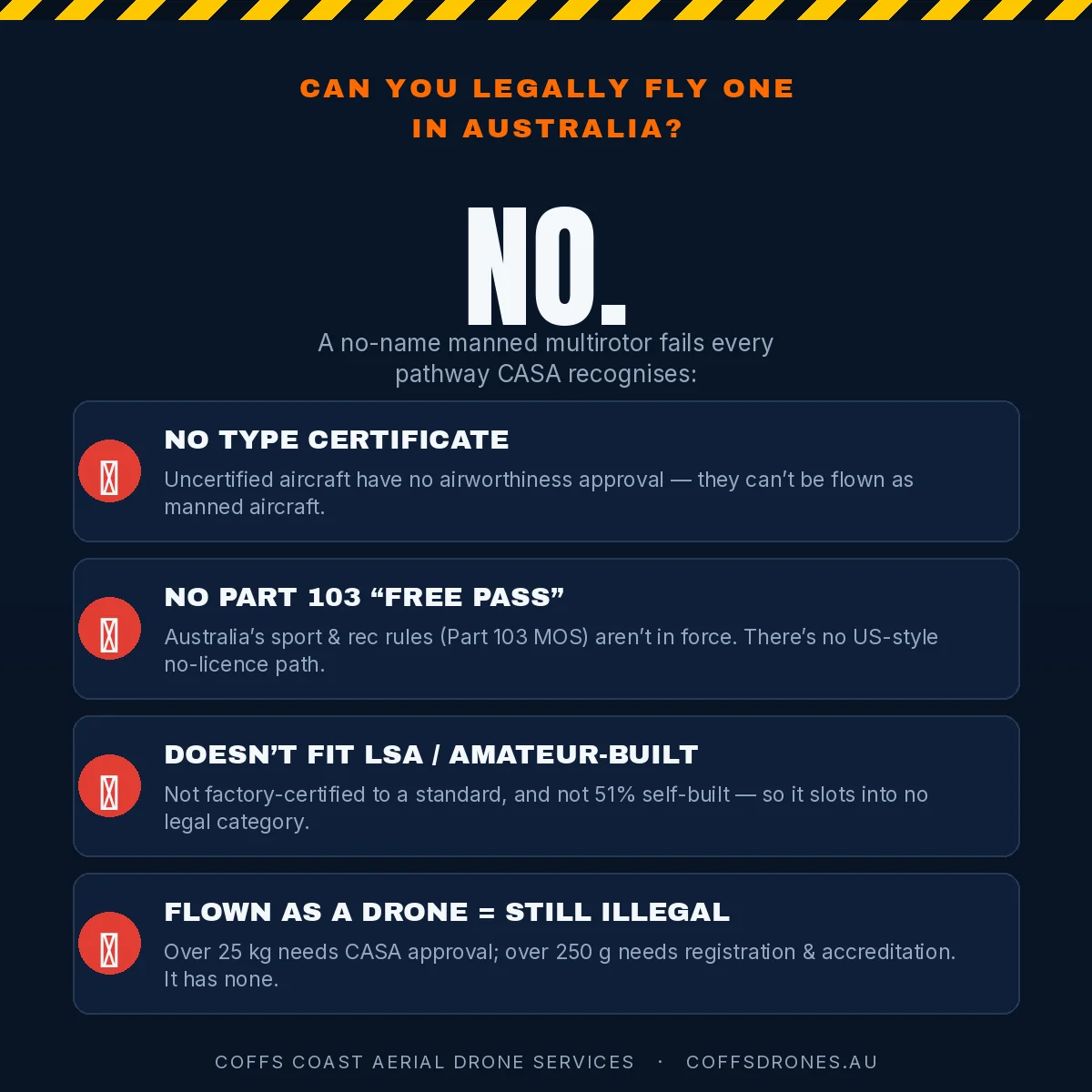
A manned aircraft generally needs an airworthiness approval — a type certificate or accepted certification standard — and a pilot with the right licence. A no-name craft that arrived in a cardboard box with a peel-off screen protector has:
- No type certificate and no airworthiness approval.
- No category to live in. It’s not a certified Light Sport Aircraft (those have to be built to a standard and certified by the manufacturer), and it’s not amateur-built (you’d need to have built 51%+ of it yourself — unboxing doesn’t count).
- No sneaky "no licence" loophole. Yes, the Americans let you fly single-seat ultralights without a licence. Australia does not have an equivalent live pathway — our sport-and-rec rules (Part 103) exist, but the Manual of Standards that makes them work isn’t even in force yet.
So there is currently no legal way to register, certify or fly one of these as a manned aircraft here. Full stop.
"Fine, I’ll fly it empty like a big drone"
Cracking idea. Still illegal. With no one aboard it’s a very large remotely piloted aircraft (RPA) under Part 101:
- Over 25 kg needs a specific CASA approval to fly at all — even just for fun. A person-carrying frame is comfortably over 25 kg before you’ve even sat in it.
- Over 250 g flown for fun already needs registration and operator accreditation.
- Use it to make a dollar and you’re commercial, which means a Remote Pilot Licence (RePL) and an operator’s certificate (ReOC).
Your Temu special scores exactly zero of these.
The bit the highlight reel skips: it’s genuinely dangerous
Certified aircraft cost real money for one boring, life-saving reason: redundancy and testing. The budget knock-offs? Usually neither.
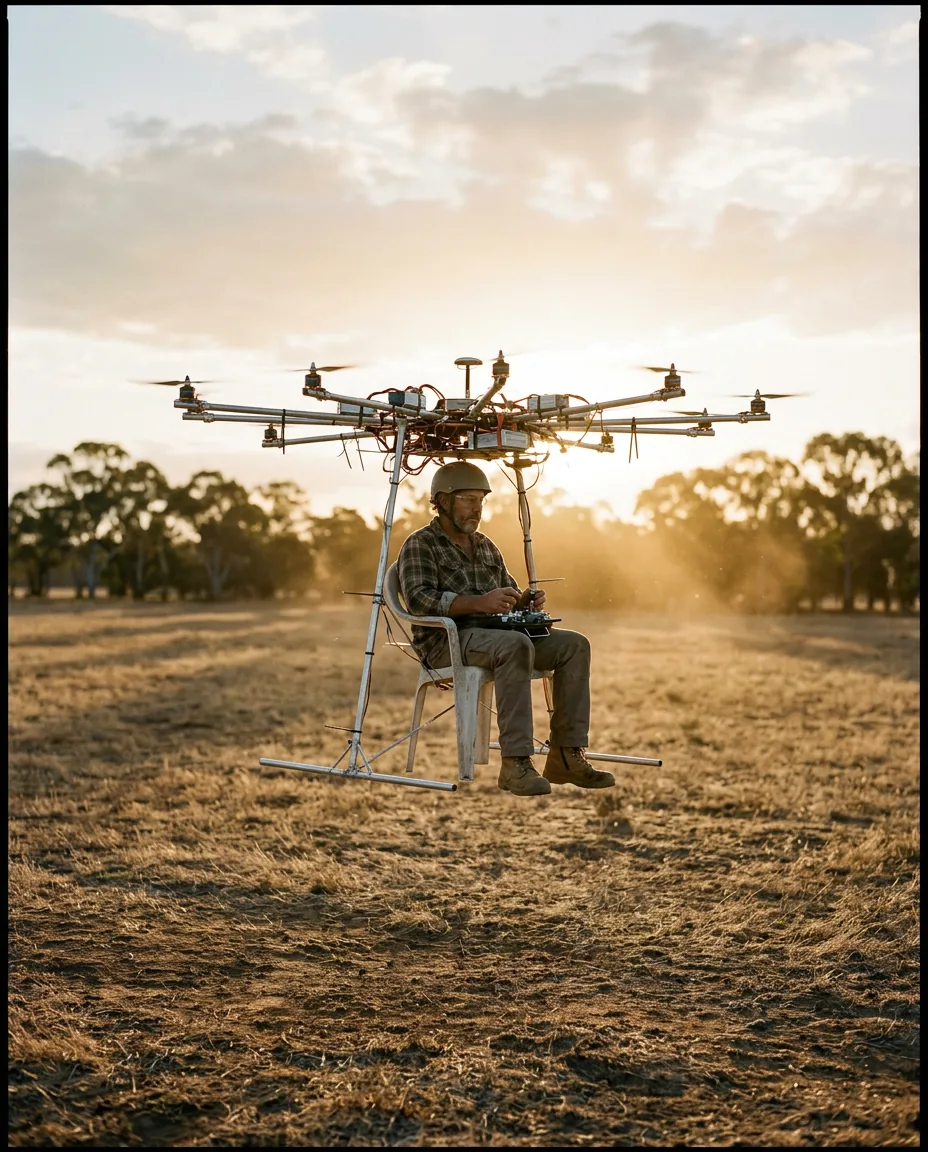
- No redundancy. One motor or ESC taps out and it becomes a very fast elevator going the wrong way. Reputable personal eVTOLs are engineered to keep flying on a dead motor. A Temu one is engineered to hit "add to cart."
- No ballistic parachute, no proven fail-safe. When it goes pear-shaped up high, there’s nothing between you and physics — and physics, unlike Temu, does not do returns.
- No airworthiness testing, no support, no spare parts, and no insurer alive who’ll touch it.
And while we’re here: there’s another clip doing the rounds of a dad who decided the ideal use for a heavy-lift drone was to dangle his own kid underneath it. It crashed, obviously. The child walked away — which is the only reason it’s filed under "funny" and not "news." Plenty don’t walk away. When there’s a human attached to a flying machine, redundancy isn’t a nice-to-have. It’s the whole ballgame.
What CASA can pluck from your wallet
Even flown "as a drone," the fines add up quick. CASA has dedicated enforcement teams and a very healthy appetite for using them:
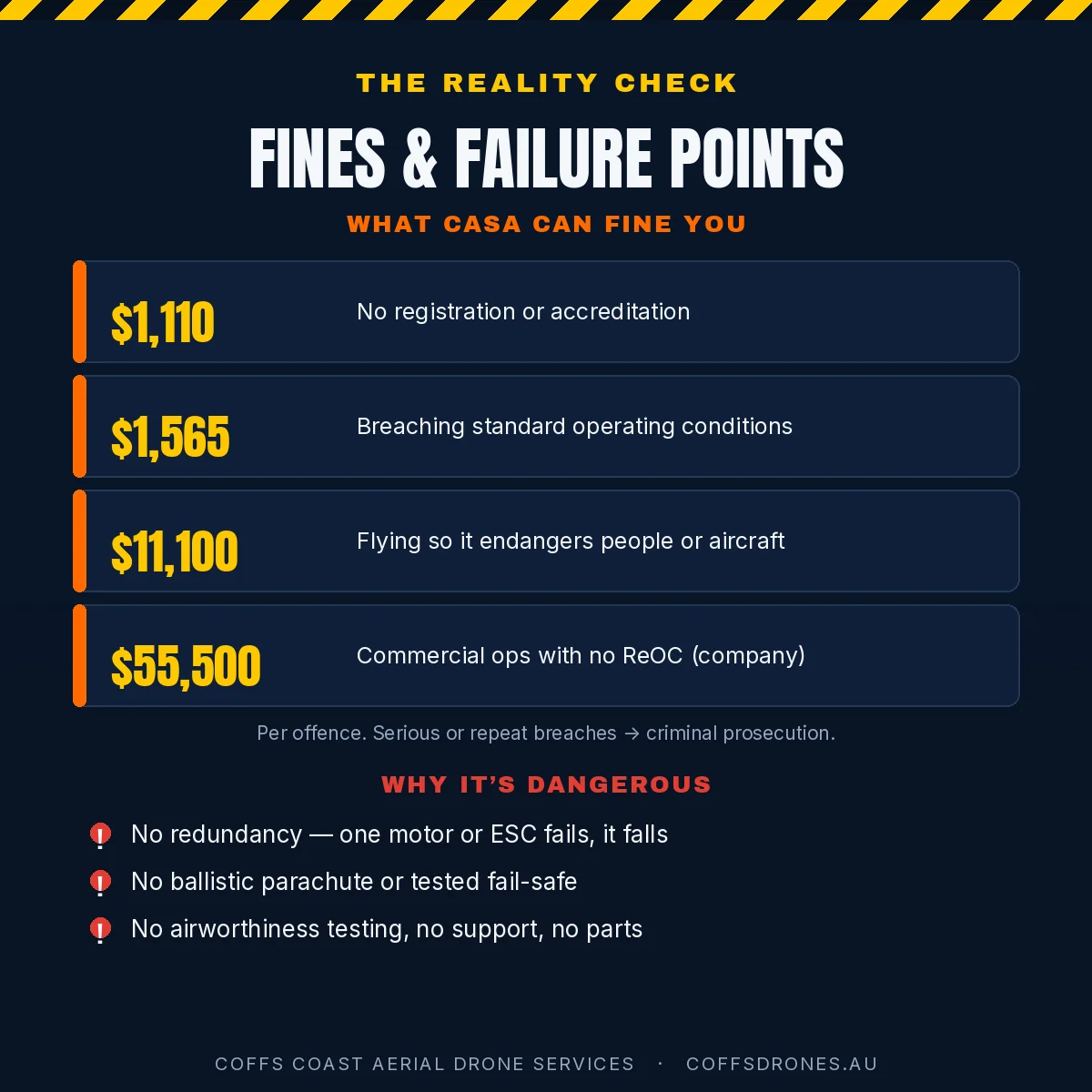
- Up to $1,110 — no registration or accreditation.
- Up to $1,565 — breaching the standard operating conditions.
- Up to $11,100 — flying so as to endanger people or aircraft.
- Up to $55,500 — a company running commercial ops without a ReOC.
Per offence. Serious or repeat efforts can tip into criminal prosecution. Suddenly the "cheap" import is the most expensive thing in the shed.
Want the thrill without the courtroom? Here’s the play
The good news: you can chase the buzz of flight and keep every dollar of your bond. Buy gear that’s CASA-legal, supported and insurable, and learn to fly it properly:
Want to see what a genuine heavy-lift aircraft actually looks like — the certified, CASA-approved kind? Have a read of our breakdown of the DJI Agras T100 and its 149.9 kg Australian weight limit. That’s what real engineering and real regulation look like, and it’s a world away from a flying deckchair.
- A quality sub-250 g drone — the fewest rules, the most fun-per-gram.
- A registered, name-brand aircraft with actual safety features and a warranty that isn’t a QR code to nowhere.
- Proper accreditation so you’re legal from your first flight.
That’s our whole gig. We stock legit, supported drones on the Coffs Coast, we’ll walk you through registration and accreditation, and when it does need work, we do drone repairs in-house — we actually fix what we sell, so you’re not chasing a mystery overseas seller who’s since evaporated.
Keen to get into drones the right way? Browse our range, book a drone repair, or get in touch and we’ll sort you out with something that’s a blast to fly and legal to own.
FAQ
Is the Temu personal aircraft drone legal in Australia?
No. Whether it’s sold as a personal aircraft drone, a human drone or a passenger drone, it’s the same thing in law: an uncertified aircraft. It can’t be registered or flown legally here, crewed or empty.
Are Temu passenger drones legal to fly in Australia?
No. A one-person "passenger drone" is treated as a manned aircraft, which needs airworthiness certification and pilot licensing it simply can’t get. Flown empty as a large drone, it still breaches CASA’s rules for aircraft over 25 kg.
Can I import one and just fly it on my own property?
Owning or importing it isn’t the sticking point — flying it is. There’s no private-property loophole that lets you operate an uncertified manned aircraft or an unapproved large RPA in Australian airspace.
What’s the difference between this and a normal drone?
Weight, and whether a person’s on board. Sub-250 g drones have the fewest rules; over 250 g needs registration and accreditation; over 25 kg or carrying a person launches you into approvals and full aircraft certification.
What drone can I legally buy on the Coffs Coast?
Loads of them. A quality sub-250 g drone or a registered name-brand model flown under CASA’s standard rules keeps you legal. Pop in and we’ll match you to the right one.
Do you repair drones on the Coffs Coast?
We do. We service and repair what we sell, plus most major brands — so you’re not shipping your aircraft overseas and hoping. Check out our shop or get in touch and we’ll take a look.